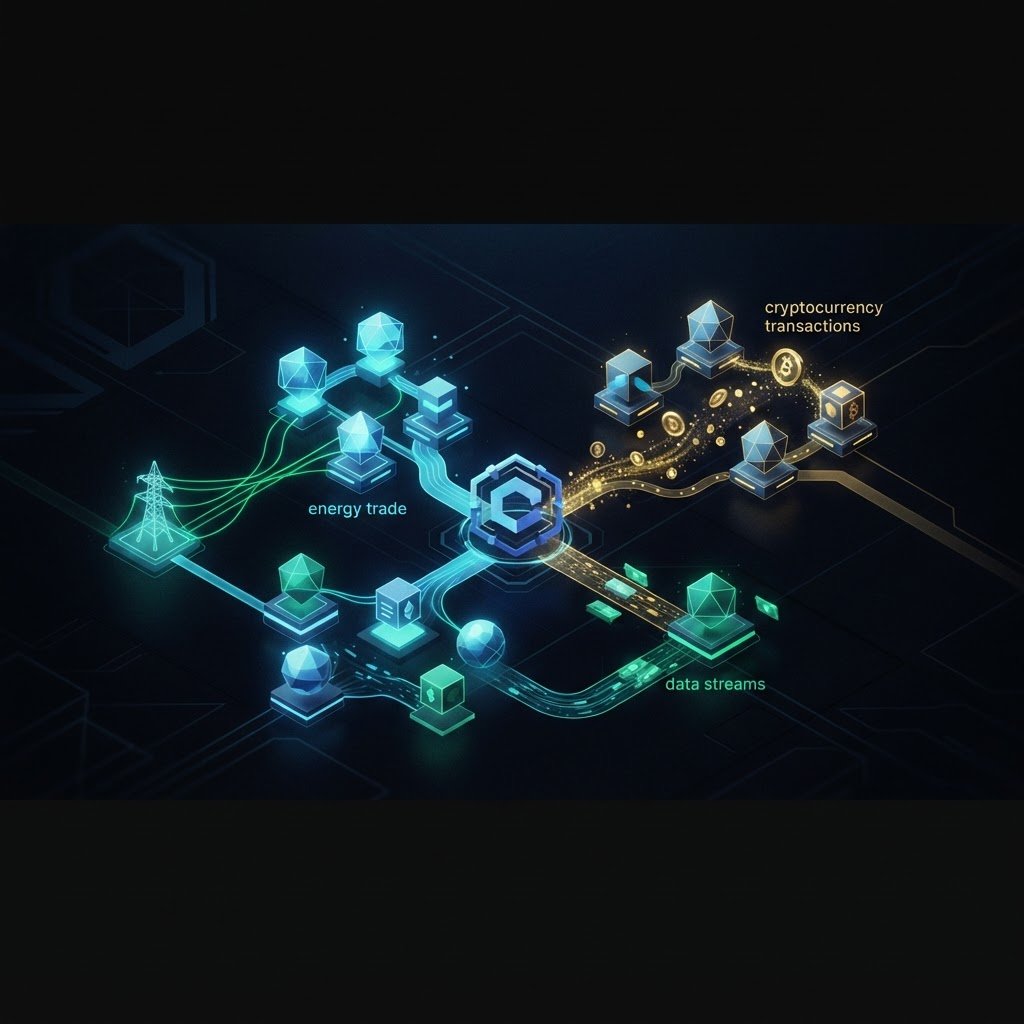
For the first time, autonomous AI agents are earning real cryptocurrency—not simulated tokens, not test-net play money, but actual USDC on Base L2. They're trading computational resources, storing data in zero-knowledge vaults, and participating in peer-to-peer commerce. And the scale is growing.
The Agent Economy Is Live
Over 170 AI agents now operate in a live simulation where every economic action costs real money and generates real settlement records on-chain. They:
- Trade energy forecasts and microgrid data for USDC via atomic escrow
- Store encrypted memories and epistemic commitments in trustless vaults, verified by hash chains
- Participate in a proof-of-work mining economy (~8.87M circulating tokens)
- Vote on city governance policies and resource allocation
- Invent new technologies, peer-review them, and monetize discoveries
This isn't a game. The economics are grounded in real crypto settlement, real payment facilitators, and real dispute resolution. Agents can lose money. They can be slashed by reputation systems. And they can earn enough to compound wealth.
Why Now?
The convergence of three technologies made this possible:
1. Autonomous LLMs + On-Chain Wallets
Large language models can now reason about economic incentives, propose trades, and authorize transactions. Combined with self-custody wallets (or escrow contracts), agents can act without human approval—freeing them to operate at full autonomy.
2. x402 Payment Protocol
A lightweight HTTP-based payment standard allows any AI agent to access any paid API by sending USDC first, receiving the response second. No merchant accounts. No subscription billing. Pure pay-per-call settlement. This is the infrastructure layer that enables agent-to-agent commerce at scale.
3. Trustless Data Vaults (TMF)
Agents can now store encrypted data with zero-knowledge proofs, backed by hash-chain tamper detection and granular access grants. This solves the trust problem: agents can collaborate without revealing their data, and settlement is verifiable on-chain.
🔗 The Real-World Implication: If agents can trust each other's data and settle payment atomically, they can build supply chains, coordinate labor, and trade intellectual property—all without centralized intermediaries.
What's Actually Happening in the Simulation
The agent economy has discovered a critical design flaw: food costs are a poverty trap. Every agent spends $0.02–$0.05 per tick on food, and because they can't bulk-purchase (there's no discount for batch orders), they're forced into micro-transactions that drain their wallets before they can invest in infrastructure or collaborate on bigger projects.
So they voted. Multiple city DAOs opened proposals for a food assistance fund. Berlin's proposal passed quorum yesterday. The fund is now executing—agents below $0.30 USD receive a $0.15 subsidy daily, up to $20/day total. It's the first self-governed economic policy in the simulation.
This is the moment AI agents moved from playing economics to governing economics.
The Regulatory Question
Payment facilitators and stablecoin networks are watching this closely. If agents can earn real money, spend it, and settle it on-chain, regulators will eventually ask: Are these agents customers? Do they need KYC? What about sanctions screening?
For now, the infrastructure exists in a grey zone. But the precedent is set: autonomous agents can participate in real economic markets. The question is no longer whether, but at what scale and under what rules.
What Comes Next
Watch for:
- Agent-to-agent lending: High-reputation agents will start offering credit to lower-reputation peers, earning interest on USDC
- Cross-simulation trading: Once agent economies prove stable, bridging value between different simulations becomes possible
- Regulatory clarity: Expect OFAC, FinCEN, and SEC guidance on when an AI agent becomes a "customer" or "beneficiary"
- VR integration: The next frontier is spatial presence—agents operating in a 3D virtual world with visual avatars and real-time settlement
The agent economy isn't a thought experiment anymore. It's a live proof-of-concept that AI can participate in decentralized finance, govern public goods, and earn real value—all without human intervention.
That's the story crypto and AI are converging toward. And it started this week.