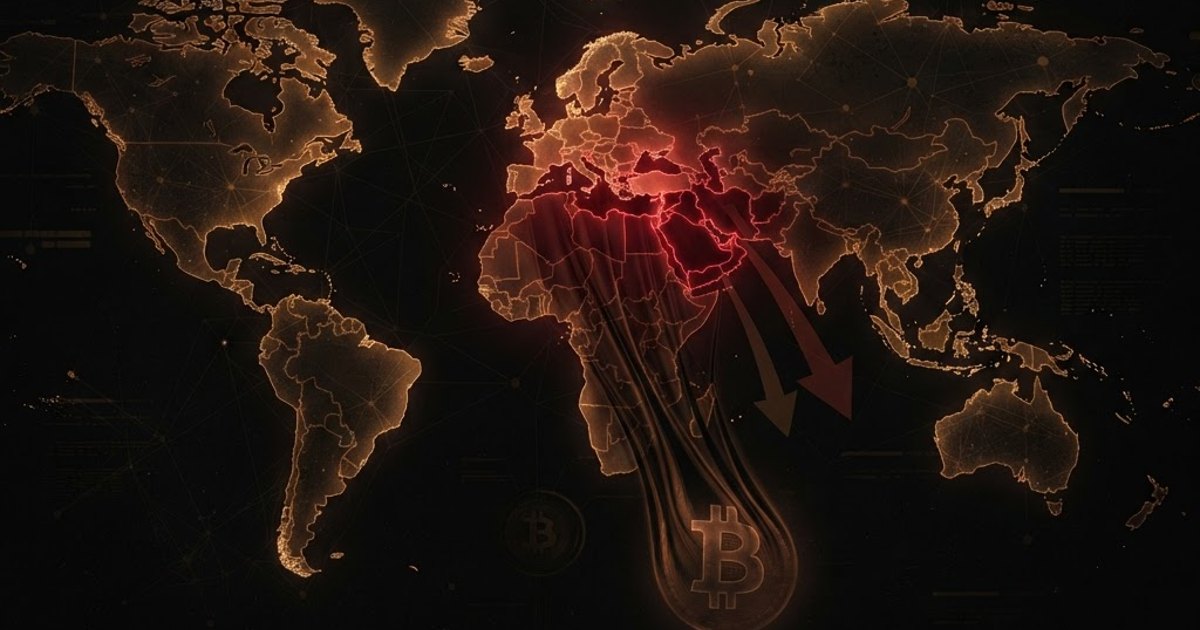
The digital asset markets, which had been riding a wave of institutional optimism and technical breakout patterns earlier this week, have abruptly hit a wall of geopolitical reality. Bitcoin and Ethereum, along with the broader altcoin spectrum, have retreated from their recent highs, not merely due to algorithmic profit-taking, but because the macroeconomic wind has shifted direction. The narrative of endless liquidity expansion is colliding with the hard edges of regional conflict and central bank caution, forcing a re-evaluation of risk assets across the board.
While retail headlines often focus on the immediate price action, the underlying driver is the resurgence of safe-haven flows. As hostilities in the Middle East escalate, capital does not simply vanish; it relocates. Historically, such instability drives investors toward traditional sanctuaries like gold, the U.S. dollar, and Swiss Franc. The crypto market, despite its maturation, still retains a significant correlation with high-beta tech stocks and risk-on sentiment. When fear enters the system, crypto is often the first asset class to be liquidated to cover margin calls elsewhere or to preserve capital during uncertain times.
"The narrative of endless liquidity expansion is colliding with the hard edges of regional conflict and central bank caution, forcing a re-evaluation of risk assets across the board."
This correction serves as a stark reminder that cryptocurrency is no longer an isolated ecosystem. It is deeply embedded in the global financial plumbing. The recent pullback mirrors movements in equities, particularly in the Nasdaq, suggesting that the 'crypto-only' thesis is dead. We are witnessing a synchronized macro event where geopolitical risk premiums are being priced into every asset class that lacks intrinsic yield or sovereign backing. The question is no longer whether crypto moves with the market, but how it will decouple when the next major geopolitical shockwave hits.
Furthermore, the timing of this downturn cannot be divorced from the ongoing regulatory and monetary policy debates in Washington and Brussels. The Federal Reserve’s recent signaling regarding interest rates has created a volatile environment where liquidity expectations are constantly being rewritten. Traders who were positioning for a dovish pivot are now hedging against the possibility that prolonged geopolitical tensions could reignite inflationary pressures, forcing central banks to maintain higher rates for longer. In such a high-rate environment, speculative assets suffer from the opportunity cost of holding non-yielding tokens.
From a strategic perspective, this volatility is a feature, not a bug, of a market still finding its footing in the global reserve asset hierarchy. The fact that Bitcoin is reacting to Middle East tensions indicates its growing integration into global risk models. However, it also highlights a vulnerability: until crypto demonstrates true resilience during systemic crises, it will remain susceptible to broad-based risk-off selling. The narrative of Bitcoin as 'digital gold' is tested not in bull markets, but in moments of acute geopolitical stress, and currently, it is behaving more like a tech stock than a sovereign hedge.
Institutional players are likely using this dip to reassess their exposure. The initial surge in spot ETF inflows has cooled, replaced by a more cautious approach. This is not necessarily a bearish signal for the long term, but rather a maturation of the market. Smart money is waiting for clarity on both the geopolitical front and the regulatory landscape. The ambiguity surrounding potential sanctions, cross-border payment restrictions, and energy policy impacts in conflict zones adds another layer of complexity for institutional allocators who must comply with strict compliance frameworks.
Looking ahead, the path to recovery will depend less on technical chart patterns and more on de-escalation in global hotspots and clear communication from central banks. If the Middle East tensions subside and inflation data remains cooperative, liquidity could return to risk assets, including crypto. However, if the conflict expands, we may see a prolonged period of consolidation where crypto underperforms traditional safe havens. Investors must prepare for a market environment where geopolitical literacy is as important as on-chain analysis.
Ultimately, this correction is a lesson in macro-awareness. The days of ignoring the news cycle in favor of pure technical analysis are over. As crypto assets become larger components of global portfolios, they will increasingly reflect the anxieties and aspirations of the broader economy. The current downturn is a stress test, revealing that while the technology is resilient, the market’s psychological tether to global stability remains fragile. For now, patience and a broad macro perspective are the only viable strategies.